
The Amazon A9/A10 Algorithm is code for the way items are listed, found, and eventually sold on Amazon. In 2025, there’s too much competition to settle for basic optimization. You need to have some knowledge of how the algorithm works just to be visible.
Amazon’s A9 ranking algorithm now considers a lot more than just keywords, including customer behavior, listing quality, seller authority and even external traffic your product receives. In this post, We’ll discuss an in-depth analysis on the Amazon A9/A10 Algorithm.
Table of Contents
What Is the Amazon A9 Algorithm?

The Amazon A9 algorithm is the product search and ranking system that Amazon uses to determine what shows up first on amazon when you type in something. The main goal of A9, though, is simple: Show the products that are most likely to make the customer happy and generate a sale.
When a customer searches on Amazon, A9 combs through millions of offerings and orders the results according to how closely they match the search query as well as how well those products have sold in the past.
The A9 algorithm was heavily focused on:
- Keyword matching (relevance)
- Sales velocity
- Conversion rate
- Competitive pricing
- Review quality and quantity
For years, A9 was the foundation upon which Amazon SEO was built. But then, with growing competition and new buyer habits, Amazon launched the A10 algorithm that updates ranking signals, resulting in more importance given to customer experience, seller authority, and external traffic.
What Is the Amazon A10 Algorithm?

The Amazon A10 Algorithm is the newer and improved functionality of Amazon’s search & ranking engine. Although it’s based on the A9 algorithm, A10 is more focused on how customers behave, the reliability of a particular product and overall shopping experience.
It has the same core mission as A9, helping customers discover the most relevant and highest-quality products, but it considers a broader range of signals to determine which listing enjoy the top status.
The major change with the A10 algorithm is that it heavily reduces the importance of PPC (paid advertising) in favor of organic performance signals, meaning a more customer-focused ranking system.
The following is a list of some important points in which A10 varies from A9:
Importance of External Traffic: A10 values those listings that can bring people from Google/ Social Media/Blog/ Influencer.
Seller Authority: Strong seller accounts with good performance metrics level up in rankings.
Customer Engagement: How much time a customer spends on a listing, the add-to-cart rate, and how many “Helpful” votes are associated to that page matter more.
PPC Sales Vs. Organic Sales: Better the organic conversion, the better will be the ranks.
Listing Trust: Reviews, ratings, and customer satisfaction are emphasized in listings.
The A10 algorithm encourages sellers to create more authentic listings, shift their focus to long-term customer satisfaction, and generate traffic outside of Amazon.
A9 Vs. A10 Algorithm: Key Differences

Both A9 and A10 want to display the most relevant and high-converting products in front of their customers, but they differ entirely in how listings are ranked by them. The A9 algorithm was very influenced by keyword relevancy and how fast a product could sell, while the new A10 is taking a human approach.
Here are the key A9 vs A10 differences every seller needs to know in 2025:
| Factor | A9 Algorithm | A10 Algorithm |
| Keyword relevance | Primary focus is heavy keyword matching | Still very important, but listing quality and user engagement are given greater weight |
| Sales velocity | Strongly impacts ranking | Organic sales matter more than ad-driven sales |
| PPC influence | Paid ads significantly boost ranking | Less impact: organic performance is more appreciated |
| External traffic | Minimal impact | Rewarded; traffic from Google, social media, influencers, blogs matters |
| Customer behavior | Limited focus | CTR, time on page, add-to-cart and bounce rate matter |
| Seller authority and account health | Moderate impact | Strong impact; order defects, late shipments, and returns are considered |
| Reviews and ratings | Review count and average rating matter | Highlights real, fresh and useful reviews |
| Customer experience | Transaction focused | Dedicated to trust and commitment for the long term |
Amazon A9/A10 Algorithm Ranking Factors (2025 Updated)
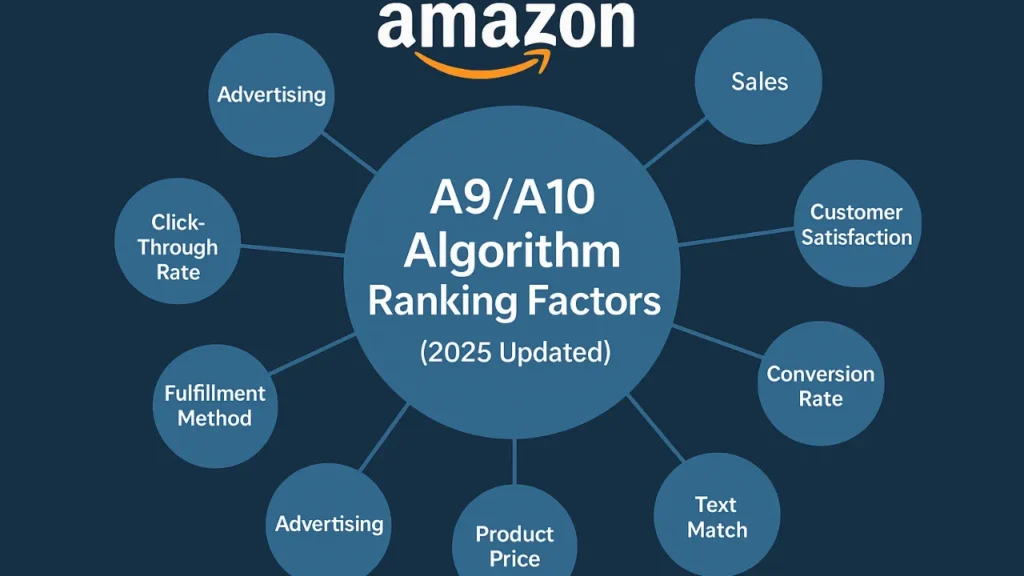
The algorithm considers several signals to decide which products show up at the top of search results.
Here’s a closer look at the major factors:
Keyword Relevance
Relevancy of keywords is still an important ranking factor. This involves finding the most relevant keywords to include in your product title, bullet points, description, and backend search terms.
The user’s search strings are then scanned by the algorithm to find combinations of these elements. Using the right keywords will help your product appear where it should, making it more visible to potential customers.
Product Listing Quality
Great product listings get prioritized by Amazon. This consists of high-quality images, informative bullets points, detailed product descriptions, and enhanced brand content (A+ Content).
Great, full looking lists not only bring in the buyers but increased engagement, which translates directly to a better ranking.
Click-Through Rate (CTR)
CTR represents how frequently customers are clicking on your listing after seeing it in search results. A good CTR tells Amazon that your product is relevant, people click on it when they see it, and want to know more.
When you optimize your main image as well as the title and price in it, your CTR is increased so that your product can move up in search ranks.
Conversion Rate (CVR)
Conversion rates are how many shoppers who visit your listing actually buy your product. i.e., a high CVR means that your product meets customer intent. Amazon prioritizes listings that convert well because they contribute to great customer experiences.
Sales Velocity
Here’s what it means: Sales velocity is measured by how fast an item sells (and continues to sell) over time. Products with a high sales history are ranked higher in the list because Amazon perceives these products as popular and credible.
That’s because steady sales will help you rank on the long term, even for new products.
Reviews & Ratings
Ratings and reviews are weighted heavily in rankings. The algorithm takes into account the volume and quality of reviews. Positive and honest reviews build trust and influence customer decisions, but negative, or even low-ranked, reviews can hurt your ranking.
Inventory Availability
Product availability is so important. Listings experiencing a high frequency of stockouts or low inventory demonstrate untrustworthiness to Amazon and can bring down your ranking.
External Traffic
The outside traffic coming to your listing from such sources as Google, social media, blogs, or influencer marketing is playing an ever-greater part under the A10 algorithm. High-quality traffic to your listings proves a demand for the product and can boost organic ranks.
Seller Authority & Performance Metrics
Your account performance and selling credibility are rated by Amazon. Reliability can be measured by order defect rate, late shipment rate, cancellations, and customer complaints.
Sellers with good metrics get rewarded and are ranked higher because, in general, they do better providing a great experience to the customer.
PPC Advertising Signals
Sponsored product campaigns and other paid advertising can be an indirect factor in organic rankings. Ads provide data to Amazon showing them that your listing is relevant because it is getting clicks, engagement, and conversions.
Although ads certainly get less of weight in A10 than they did on A9, running smart PPC campaigns still helps visibility.
How to Optimize Your Listings for the Amazon A9/A10 Algorithm in 2025?

Amazon values the customer experience and trust, engagement, and organic performance today. Here’s how you can ensure that your listings are completely optimized to dominate the rankings and sales:
Conduct Deep Keyword Research: Keyword relevance is foundational to Amazon SEO. Consider using tools like Helium 10, Jungle Scout and / or Amazon autocomplete. Discover high-volume, long-tail, and competitive keywords.
Disperse your primary keywords in the title, bullet points, description, and backend search terms. Readers are smarter than you think! Embed your keyword in a natural way. Avoid keyword stuffing!
Create a High-Converting Product Title: Your title is the first thing customers and Amazon’s algorithm can read. Place your primary keyword at the start. Include important details such as the size, material, and quantity. The title should be written with the customer’s perspective in mind.
Write Bullet Points Both for SEO and Readability: Bullet points should respond to the questions that customers may have and emphasize selling points. Use secondary keywords naturally. Sell the benefits, not just the features. Solve your customer’s most common pain points and increase conversion.
Write Detailed and Compelling Product Descriptions: A good description will help Amazon know more about your product. Tell a story about why the product is valuable. Use proper formatting for readability (organized, bullet points etc). Include all the specs, use cases, and care instructions.
Utilize High-Quality Images & A+ Content: Nothing draws customers better than great images and content (especially as first impressions go). CTR and conversions are so much mean on visual. Use 7–9 high-resolution images.
Display lifestyle images, infographics, and close-up details. If you are a brand-registered seller, and use A+ Content to boost engagement and sales.
Improve Your CTR (Click-Through Rate): Click-through rate is one of the big A10 ranking factors. Use a high-contract hero image with a white background. Make your price competitive within your market. Leverage badges whenever you can, such as “Amazon’s Choice” or “Limited Time Deal.”
Boost Conversion Rate (CVR): Amazon measures the success of listings based on what actually sells. Offer competitive pricing and promotions. Highlight guarantees (e.g., lifetime warranty). Fast response to customer inquiries is a confidence booster.
Build Strong Sales Velocity: Regular sales move your listing high in the rankings. Use Amazon PPC to generate early momentum. Offer time-limited coupons, flashing deals, or launch discounts. Advertise your listing on social media or blogs.
Manage Reviews & Ratings Actively: Another aspect where reviews do play an important role is trust and ranking. Receive reviews with Amazon’s “Request a Review” tool. Respond politely to negative reviews. Enhance the quality of your product to minimize cost in regards to returns and complaints.
Keep Your Inventory Fully Stocked: Stockouts damage ranking. Monitor inventory levels daily. Use Amazon’s restock alerts. In this case, we keep a safety stock for the peak seasons.
Drive External Traffic (Crucial for A10): One of the biggest A10 factors is outside traffic. Utilize social media profiles, blogs, YouTube reviews, and influencer endorsements. Create articles optimized for Google SEO and share Amazon links. Track the performance of external traffic with Amazon Attribution.
Maintain Strong Seller Performance Metrics: Amazon rewards reliable sellers. Keep order defect rates low. Avoid late shipments. Reduce cancellations and customer complaints. Handle any issues with customer service ASAP.
Leverage Amazon PPC for Organic Ranking: While A10 prioritizes organic performance, PPC still has a vital supporting role to play. Set up automatic campaigns to gather data. You can target converting keywords with manual campaigns. Gradually decrease your bids when organic ranking improves.
FAQs: Amazon A9/A10 Algorithm in 2025
How long does it take to rank a product on Amazon in 2025?
The rank time depends on your listing quality, sales velocity, PPC strategy you are using, keyword optimization, and external traffic. It usually takes 2-6 weeks for new product to start ranking for the main keywords and up to a couple of months for highly competitive niches. Regular traffic and conversions can shorten the timeline.
Does outside traffic have a positive impact on Amazon rank A10?
Yes! The A10 algorithm heavily weighted external traffic from Google, social media, blogs, YouTube, and influencers. If Amazon notice’s that your product is bringing customers from off of the platform, they’ll see that as popularity points and boost your organic rankings.
Are PPC ads relevant to A10 algorithm?
They do, but their impact is different. PPC doesn’t impact ranking as it used to, but it does impact ranking by improving various important A10 ranking factors like CTR, sales velocity, and conversions. Smart PPC drives long-term organic ranking.
Conclusion: Amazon A9/A10 Algorithm in 2025
Amazon has shifted its ranking algorithm to place more emphasis on customer engagement, organic performance, and overall listing quality.
By using keywords to the best advantage, improving listing contents, keeping your seller metrics strong, and driving external traffic, you can greatly increase your chances of ranking in Amazon for search.
The road to success on Amazon is about building a dependable and high-performing product page that delivers for customers’ time after time. In fact, sellers who adjust to these new ranking factors and take a forward-thinking approach to optimization will stand out in 2025 and beyond.