On Amazon, every seller must ask him/herself this age-old question:
Should you spend your time optimizing your product listing or simply throw money at PPC ads to secure immediate visibility?
The reality is that both can spurn massive growth, and choosing the wrong priority at the wrong time is enough to suck your budget dry, snuff out your momentum, and bury your product pages.
Imagine this:
You have great images in your listing, with top-notch bullets and the perfect keywords, but you aren’t found. No traffic means no sales. Or, conversely, you might end up running PPC ads to push your product to page one only, for PPC visitors not converting and having your money go up in flames.
Bad images, lousy copy, or the wrong keywords are enough to render the most high-cost ads worthless. This is the area that many Amazon sellers struggle with. Listing optimization drives up organic ranking over time, whereas PPC ads provide quick traffic and a temporary sales boost.
But which one to prioritize will depend on your product stage, margins, level of competition, and visibility. In this post, we unpack the true impact of both strategies (listing optimization vs PPC advertising), the data supporting them, and what you actually should be focusing your time and budget on.
Table of Contents
Executive Answer (Short) — TL; DR
If you have to make a choice between listing optimization & PPC, choose listing optimization first. An optimized listing that converts well means every PPC click is cheaper and more profitable.
After you have good images, keywords, and content, then and only then use PPC advertising to get quick visibility, to gather data on what keywords work best, and drive organic ranking.
In other words: Optimize the listing → Scale with PPC.
What Each Tactic (Listing Optimization Vs PPC Advertising) Actually Does?

In order to distinguish between the two, listing optimization vs PPC advertising, you need to first understand the true meaning and effects of each. Both can help with sales, but work in distinct ways and also influence Amazon’s ranking system in different ways.
What Does Listing Optimization Do?
Listing optimization is the basis on which your products will be discovered and converted. It enhances the way Amazon’s algorithm A10 sees your product since it helps Amazon decide whether your product is deserving of ranking at a higher place in organic results.
An optimized listing should have titles that are keyword-rich, bullet points, good images, A+ content, and back-end search terms to match the buyer’s intention. But listing optimization extends beyond keywords. The Amazon algorithm is super-sensitive to behavioral signals, e.g., CTR, time spent on page, ATCR, and total CR.
A well-optimized listing with good images and compelling copy, of course, does wonders for these signals. Thus, Amazon becomes confident that your product meets user search intent and lifts your listing up in organic ranks. Optimized listings help increase the likelihood of any traffic, whether paid or organic, converting into sales.
What PPC Advertising Does?
Amazon PPC (Pay-Per-Click) advertising delivers immediate traffic by getting your product in front of super-high-intent shoppers. With Sponsored Products, Sponsored Brands, and Sponsored Display, PPC ads will enable you to reach out to specific keywords, competitor listings or customer interests.
This means you could bypass slow organic ranking and go straight to page one within hours.
There are three reasons PPC is vital:
- Immediate visibility
- Keyword discovery and data insights
- Sales velocity boost
But PPC only works if your listing is strong. If the images and content suck, those clicks won’t convert, and you’ll have very high ACoS and wasted budget.
Data & Metrics to Watch

To determine whether you should focus on listing optimization or PPC advertising, you need to understand the KPIs (Key Performance Indicators) that indicate what your product really needs. These metrics will let you know if the issue is with traffic (visibility) or conversion (listing quality).
Listing Performance Metrics
Organic keyword ranking: Monitor your position for both primary and secondary keywords. Low rankings, even with decent PPC or ORG traffic, means your listing isn’t relevant or optimized.
Click-through rate (CTR): CTR is a measurement of how well your title and main image stand out on search results. A CTR under 0.3%–0.5% is indicative of low visual appeal or poor keyword targeting.
Conversion rate (CVR): Amazon’s average CVR is between 8%-15% by category. If your CVR is low, you probably require better images, content, reviews, or pricing adjustments.
Sessions and page views: When you have low sessions, you have a visibility problem. If sessions are high and sales are low, you have a conversion issue.
Review rating and sentiment: Less than a 4-star rating or numerous complaints can negatively impact your ranking/ conversion, regardless of how well-chosen your keywords are.
PPC Performance Metrics
ACoS (Advertising Cost of Sales): A high ACoS means your ads are not converting at a profit. It could mean that the list is not well optimized or the keywords are just a poor match.
TACoS (Total ACoS): An increasing TACoS indicates ads are not lifting organic sales. If your TACoS is dropping, it means your PPC is enhancing the organic visibility.
CPC (Cost per Click): High CPC means competitive keywords or little relevance on the ads. Working on listing relevance can lower CPC in the long term.
Search Term Reports: These show the exact words customers use. You need to add high-converting search terms into your listing and then into the manual campaign.
When to Prioritize Listing Optimization (Long Checklist + Examples)
You should not spend money on PPC ads until you have a listing that converts visitors to sales. Otherwise, even the most targeted ads will yield little success.
Indicators You Need for Listing Optimization
If your product is getting impressions but very few sales, it’s likely because there’s an issue with the listing itself, either the titles, bullets, images, or description aren’t persuasive enough or clear.
Even with good products, if you are not optimizing your keywords properly or don’t have a backend search term, then they can stop ranking. PPC is costly and not sustainable without a solid organic visibility.
Listings with poor quality images, lifestyle images, or an unstructured bullet point list don’t make buyers want to click. Even if you’re serving targeted ads, if your listing looks unprofessional or unclear, it’ll be hard to convert clicks into sales.
If you’re hearing regular reports of unclear product descriptions, bad images, or unanswered questions, then maybe the focus should be on listing optimization first. Better content and explanation also reduce returns and increase organic ranking.
In more competitive categories, listings that don’t maximize keywords and compelling copy will lose both clicks and conversions. Getting the most out of your listings allows you to compete without blowing out on ads.
Listing Optimization Checklist (Step-by-Step)
Keyword research and placement: Find keywords that convert well and include them in your title, bullet points, description, and backend search terms. Leverage tools such as Helium 10, Jungle Scout, and MerchantWords.
Hero image and lifestyle images: Your primary image needs to present the product well. Use lifestyle and comparison images to show scale, use, and benefits.
Bullet points focused on benefits: Highlight unique selling propositions. Focus on how the product resolves an issue or enhances the buyer’s life.
Compelling product title: Try to add your target keywords and make the title understandable. Don’t stuff keywords and think more in terms of clarity and search intent.
Price and availability audit: Make sure your pricing is competitive, and you have good inventory levels. An amazing listing isn’t going to convert if your product is out of stock or overpriced.
Reviews and Q&A strategy: Engage others to leave positive reviews and answer customer questions. Address common objections head-on in your listing content.
Enhanced Brand Content (EBC)/A+ content: If your brand is registered, use enhanced content to build visually stunning, enlightening product pages that will raise conversion.
A/B Testing: Experiment with different titles, images, and bullet points to determine what connects most with your audience. Even minor tweaks can lead to big increases in your conversion rates.
Example Scenarios
New product launch: The listing needs to be optimized so that it converts the first set of buyers and ranks organically for some keywords early on, before even spending on PPC.
Low-converting SKU: If you have decent traffic to your product but there are no sales, concentrate on rewriting bullets, updating images, and including best-performing keywords.
High competition category: Listings that clearly communicate value and have great images will do better than competitors even without spending on ads.
When to Prioritize PPC Advertising (Long Checklist + Examples)
PPC (Pay-Per-Click) advertising is critical for achieving rapid visibility, driving sales in a highly competitive landscape. Listing optimization provides a sturdy base, but PPC is the accelerator. There are obvious situations where PPC should come first.
Indicators You Should Prioritize PPC Advertising
When you come out with a new SKU, it has no reviews, zero search history, and it is not organically ranking. PPC is the quickest way to drive initial traffic, sales, and also keyword signals that tell Amazon what your product should rank for.
If your optimization is good and paid off well, but the issue lies in getting enough impressions, clicks PPC can help to break this cycle by forcibly pushing your product in front of a potential buyer that would never get to it organically.
In sectors already saturated with established sellers, I don’t think organic ranking is going to cut it. PPC allows you to show up alongside the top competition and swiftly steal market share.
When it comes to holiday, trending, or seasonal items, there is just no waiting for organic rank to build up. PPC speeds up exposure on high-purchasing intervals.
PPC tells you exactly what search terms are converting. Real customer data is so much better to lean on than any keyword research tool. If you want quick answers, go for the PPC.
Amazon rewards products that produce sales at a steady clip. Higher sales velocity through PPC has also been shown to make listings rank organically higher, resulting in a compounding effect on long-term performance.
PPC Advertising Checklist (Step-by-Step)
Let Amazon discover relevant keywords. Use the search term report to find high-converting phrases that you can add.
Put your winning keywords into manual exact campaigns to have the most control and profit.
These are the ads that immediately convert best, and they work especially well for getting started or scaling.
Sponsored Brands enhance top-of-page presence; Sponsored Display supports cross-selling and retargeting.
Raise bids for high-buying-intent search words (“best,” “buy,” brand name) and lower them for more general or research-focused terms.
Prevent irrelevant searches so ad spend is not wasted. This helps to keep ACoS at a manageable level and makes the campaign more efficient.
Monitor impressions, CTR, CPC, conversion rate, and ACoS. Then use TACoS to gauge whether ads are increasing your total sales, not just paid sales.
Increase bids and budgets on campaigns that are consistently meeting your profit targets.
Example Scenarios
New product launch: You launch a kitchen tool in a crowded market. PPC plants you on page one immediately, and can generate early sales and collect keywords to perfect your listing.
High-converting listing, low traffic: If you have great conversion (15–20%), but low impressions, PPC can drive qualified shoppers in short order, raising both paid and organic sales.
Seasonal products: PPC can also be used to boost visibility of items such as Christmas décor or summer wear, maximizing exposure during the short peak season.
Combined Strategy: How Listing Optimization & PPC Amplify Each Other
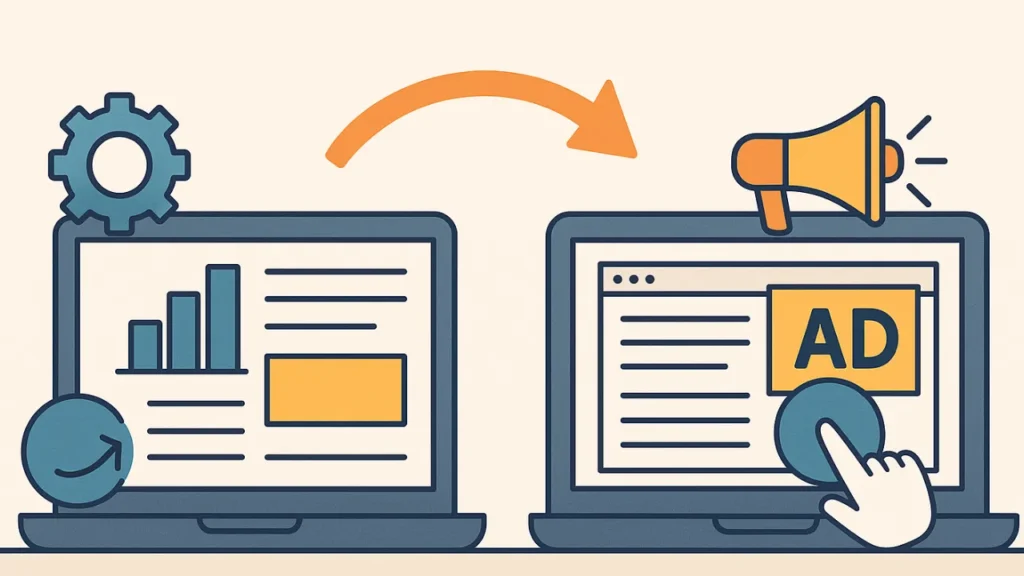
Listings optimization and PPC advertising are typically seen as separate tactics, but for many successful sellers, the best approach involves a coordinated system.
PPC Drives Traffic and Listings Convert Traffic
PPC brings immediate visibility. It gets your product onto page one, where millions of shoppers look. But PPC alone will not drive sales; your listing must convert that traffic.
When your images, bullets, and title are fully optimized, each paid click is going to be more likely to turn into a sale. It lowers your ACoS, boosts your profitability, and helps improve your PPC efficiency.
Listing Optimization Improves Relevancy, and PPC Gets Cheaper
Amazon rewards relevancy. Proper keyword placement, a clear title, and correct backend search terms will improve your listing’s keyword relevancy score.
More relevancy is likely going to result in lower CPC (Cost per Click) as Amazon’s ad system gives priority to listings that match customer search intent. In simple terms, a well-written listing makes your PPC clicks cheaper.
PPC Generates Keyword Data, and Listing Gets Stronger
One of the coolest features when it comes to PPC is the search term report. It even shows you exactly what the keywords were that brought conversions. You can then feed these top-performing keywords back into your listing title, bullets, or backend to help boost organic visibility.
With time, your listing is more accessed to be in line with actual shopper behavior and not just theoretical keyword tools.
Strong Listing + PPC Boost Sales Velocity à Organic Ranking Rises
Sales velocity is heavily rewarded by Amazon’s A10 algorithm. When your listing is converting and PPC keeps generating daily sales, your organic ranking naturally improves. When organic ranking goes up, you need PPC less, and your overall TACoS decreases.
This is the flywheel effect:
Better listing à Better PPC à More sales à higher organic rank à Less PPC needed
Combined Strategy
PPC provides immediate results. Listing optimization provides long-term growth.
It’s a big win-win when the two are combined:
- Fast visibility from PPC
- Organic traffic is sustainable with optimized listing
- High relevancy means cheaper ad costs
- Long-term ranking stability
Prioritization Framework: A Decision Matrix (Quick to Use)
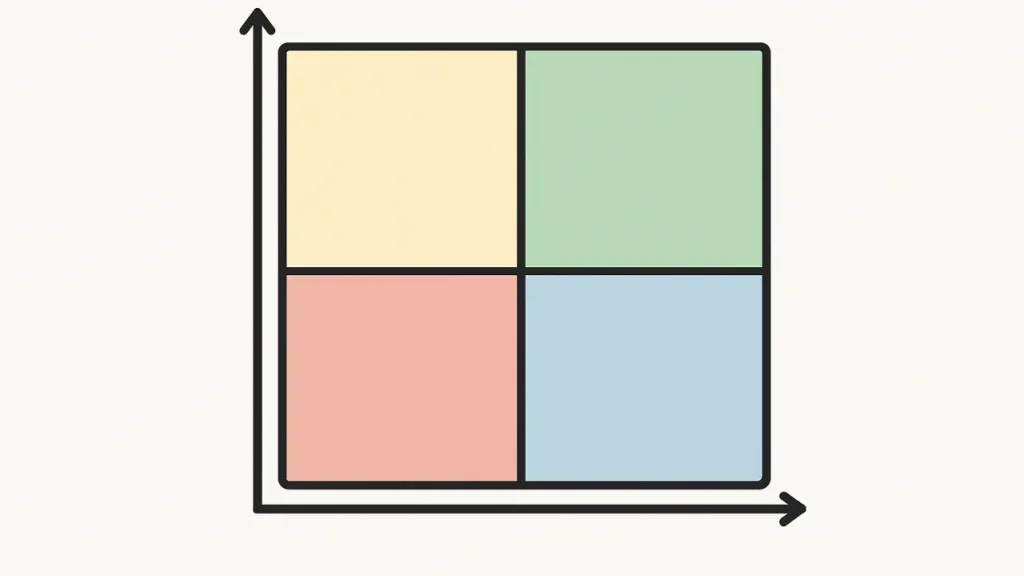
Deploy this easy decision matrix to immediately know which strategy should be your highest consideration, given your product’s data, stage, and market conditions. New sellers and experienced brands can apply this framework.
Identify Your Primary Problem — Traffic or Conversion
Ask these two questions:
Do you get traffic but lack sales?
- Sessions are high
- Click-through rate is normal
- Conversion rate is low
PRIORITY: Listing Optimization
Your problem isn’t visibility; it’s persuasion. Optimize images, copy, pricing, keywords, and review strategy.
Have little traffic?
- Low impressions
- Low sessions
- Not much or no visibility on search results
PRIORITY: PPC Advertising
Your listing isn’t being seen. Start using PPC to get visibility, data, and initial momentum.
Use the Decision Matrix
| Situation/metric | What it means | Priority |
| High traffic + low conversions | Listing is weak | Listing optimization |
| Low traffic + strong conversions | Visibility issue | PPC advertising |
| New product launch | Zero ranking | PPC advertising |
| High ACoS on ads | Listing not converting | Listing optimization |
| Low organic ranking despite strong listing | Need sales velocity | PPC advertising |
| High competition niche | Need to compete immediately | PPC advertising |
| Poor CTR on search results | Weak main image/title | Listing optimization |
| Rising TACoS | Ads not building organic sales | Listing optimization |
| Seasonal product | Limited time window | PPC advertising |
The 70/30 Rule
If that’s still a little unclear, follow this basic rule:
- If conversion is the one that’s been troubling you → allocate 70% of your effort to optimization and 30% to PPC.
- If it’s visibility you’re struggling with → allocate 70% of your effort to PPC and 30% to listing optimization.
Both things must happen in the same period, but at different proportions based on your goal.
Re-Evaluate Every 2-4 Weeks
Amazon’s performance changes quickly.
Re-check:
- Conversion rate
- Sessions
- CTR
- ACoS / TACoS
- Keyword ranking
Then adjust your priority again.
Experiments & A/B Testing Plan
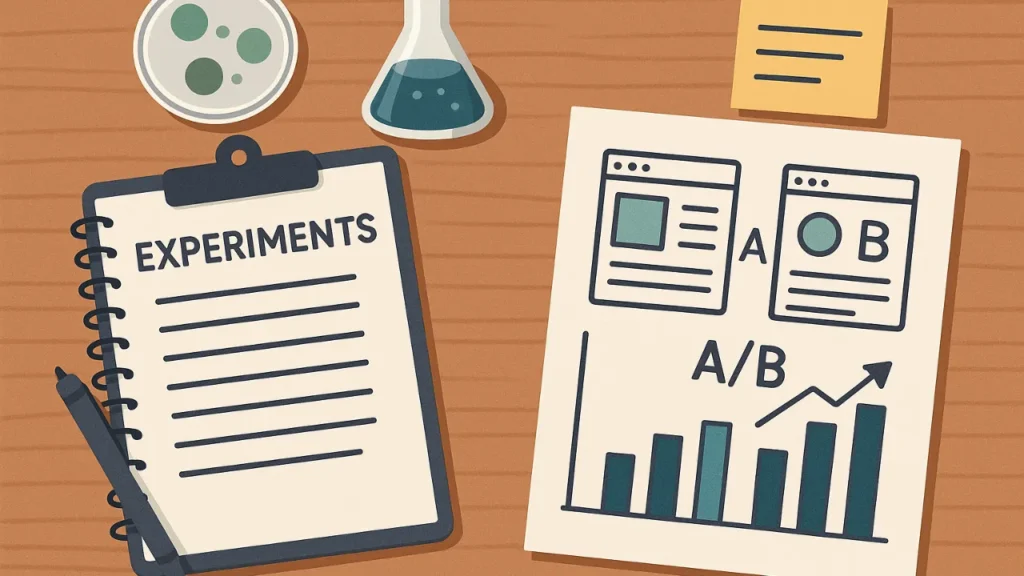
By following a structured process of experimentation, you can pinpoint what specifically it is about an optimization/PPC variable that gives the biggest lift in conversions, CTR, and sales efficiency overall. Begin by varying only one variable at a time.
Listing optimization tests: Start with tests that impact customer decision-making most directly. Compare lifestyle vs. clean white background, different angles, or added text badges. Track impact on CTR and CVR. Try keyword-rich vs. benefit-focused titles.
Calculate impression, CTR’s and ranking changes. A/B test one-punch bullets vs. storytelling bullets and see which drives a higher session-to-order rate. Try a 5–10% price change to see the impact on conversions and revenue stability.
PPC campaign tests: Focus on increasing ROAS and decreasing ACoS. Compare broad vs. phrase vs. exact to find the most profitable intent stage. Adjust bids for top-of-search vs. product pages to compare for better conversions. Try testing other headline angles or brand logo placement for better engagement.
Duration and evaluation: Let each test run for 7-14 days until reaching the suitable traffic level. Preferably, use thresholds that are statistically significant (95% confidence). Keep an eye on such stats as CTR, CPC, CVR, TACoS, and order growth.
Documentation and rotation: Maintain a testing log with hypothesis, setup, results, and learnings. Keep turning tests to optimize both listing quality and PPC ads. By continuing to test and learn, your Amazon strategy evolves alongside competition, seasonality, and shifting consumer trends.
Common Pitfalls & How to Avoid Them

Even savvy Amazon sellers make errors that can stunt their growth, waste ad spend, or damage the performance of their listings.
- Title rewriting/re-imaging/pricing based purely on assumptions by many of the sellers.
How to avoid: Always check CTR, keyword ranking, and conversion rates before you make any changes. Check buyer intent with tools such as Brand Analytics, Product Opportunity Explorer, or Helium 10.
- You can’t see the performance of broad, phrase, and exact match in the same campaign.
How to prevent: Organize campaigns by specificity. Exact match in one, phrase in another, broad in discovery.
- Early visibility can also be created by high bids, but if your listing isn’t already conversion-ready, you will just spend money.
How to prevent: Fix the listing quality first, such as images, title, and reviews. Only scale bids once you are happy with your CVR.
- This lack of attention to negative keywords results in budget lost on irrelevant searches.
How to prevent: Add negative keywords each week from search term reports in order to stop unprofitable clicks.
- Conversions can fall, or even perceived value can decrease due to extreme price changes.
How to prevent: Adjustments should be controlled with 5–10% (in terms of percentage change) and effects observed over a period of at least 7–14 days.
- Stockouts destroy ranking and increase PPC cost when you return.
How to prevent: Have 30-45 days of inventory on hand, and have automatic restock notifications.
- What’s good for one product isn’t always good for another.
How to prevent: Look at your own audience behavior, as well as buyer messages, reviews, and analytics.
- Making too many changes at once disrupts data integrity and muddies Amazon’s algorithm.
How to prevent: Only change one thing at a time, and see what effect it has.
FAQs: Listing Optimization Vs PPC Advertising on Amazon
What should I focus on first-optimizing listings or PPC?
Always optimize your listing first. Compelling images, keywords, and copy boost your conversion rate, which will mean a lower cost per click for your PPC ads.
Can PPC correct a badly optimized listing?
No, you can use PPC to generate traffic, but it won’t fix bad conversions. If your listing is crappy, you will pay for clicks that do not convert into sales.
When will I see results from listing optimization vs PPC advertising?
Listing optimization is often visible in 3-14 days. PPC provides quick visibility, sometimes even within the hour, but to truly make it long-term, you’ll need a lot of fine tuning and at least a well-optimized listing.
Conclusion: Listing Optimization Vs PPC Advertising
Listing optimization and PPC are two parts of a holistic approach for achieving long-term Amazon growth. First, you create an optimized listing focused on conversion and then to PPC that will speed up search visibility, help build out keyword data, and scale profitable traffic.
If these two are working in concert, a couple of things happen: Organic rankings rise, ACOS gets better, and overall sales start to become more consistent.
Next Steps:
- Review the images, keywords, and conversion rate of your listing.
- Launch small but targeted PPC campaigns to capture real search-term data.
- Optimize for performance and scale your converting keywords.
- Keep A/B testing to improve creatives, pricing, and targeting.
This simple rinse and repeat model keeps your Amazon strategy: lean, profitable, and poised for long-term success.